
Exploitation Unlimited!
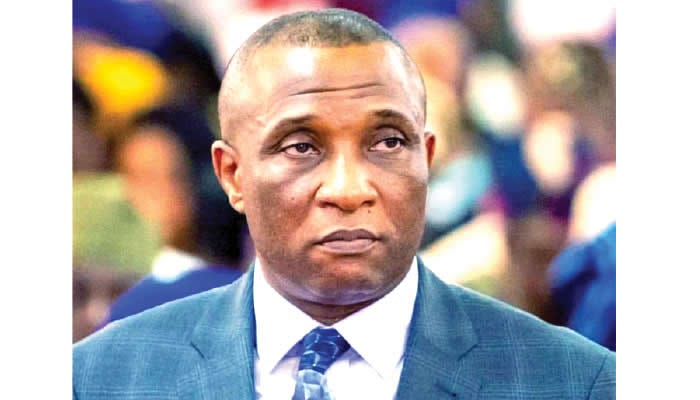
CEO, FCCPC, Tunji Bello
NIGERIANS are reeling under a punishing climate of unchecked and often brazen exploitation. A new report by the Federal Competition and Consumer Protection Commission merely confirms what citizens already know from lived experience. The energy, fintech and telecommunications sectors are at the forefront of a systemic assault on consumers. The indictment is hardly surprising; it is, in fact, overdue.
The details are damning. The agency’s Executive Vice-Chairman, Tunji Bello, disclosed that the commission has received thousands of complaints across these sectors and recovered over N20 billion for consumers as of March 2026.
Between March and August 2025 alone, more than 9,000 complaints were resolved, with over N10 billion clawed back for aggrieved Nigerians. These figures are significant, but they are also an indictment of a system that allows such abuses to fester in the first place.
“For energy, people complain about electricity supply, and so on,” Bello lamented. “That’s where we get most complaints. And that led to recent action in Lagos against a DisCo.
“Also, fintech. You know, people do a lot of transactions online, and most of them are either given unfair terms,” he said.
“Somebody has borrowed money, and then you discover that when they ask to pay back, the interest rate is outrageous. Most of them we have interrogated, and we’ve been able to resolve as many as possible.”
What emerges is a pattern: exploitation thrives where regulation is weak, enforcement is compromised, and consequences are negligible. Nigeria’s security and judicial systems, rather than acting as safeguards, too often enable this predatory environment through inefficiency, delay, or outright compromise.
Nowhere is this more evident than in the power sector. Despite repeated government assurances about the availability of prepaid meters, DisCos remain stubbornly reluctant to provide them. They have been locked in a prolonged standoff with the Ministry of Power, while consumers continue to bear the brunt.
Under the World Bank-funded DISREP programme and a N700 billion Presidential initiative aimed at eliminating arbitrary estimated billing and installing 3.4 million smart meters, progress has been painfully slow. Most consumers remain unmetered and, therefore, vulnerable.
In the meantime, Nigerians are subjected to the double injustice of estimated billing and indiscriminate disconnections, often in blatant violation of regulations set by the Nigeria Electricity Regulatory Commission.
The much-touted band classification system has failed to deliver relief. Reliable power supply remains a mirage, even as tariffs climb relentlessly.
Beyond the marketplace, exploitation takes on more insidious forms. Influential Nigerians routinely weaponise their proximity to security agencies against ordinary citizens. Laws such as the Cybercrime Act are increasingly deployed to suppress dissent and circumscribe fundamental rights.
Indeed, there is a growing perception that security agencies respond more swiftly to allegations of cyberbullying than to the existential threats posed by terrorists and kidnappers. This distortion of priorities is as troubling as it is dangerous.
The justice system offers little reprieve. As of early 2026, over 51,000 Nigerians were reportedly languishing in custody awaiting trial, many for minor offences, petty infractions, or simply because they cannot afford modest fines.
This accounts for roughly 64 to 67 per cent of the total inmate population, with countless individuals spending years behind bars due to slow judicial processes, lack of legal representation, or stringent bail conditions.
Even where alternatives exist, they are routinely ignored. The Administration of Criminal Justice Act provides for non-custodial measures such as community service, yet security agencies continue to default to custodial remand. The result is a congested, unjust, and dehumanising system that punishes poverty more than crime.
Disturbingly, this dragnet also ensnares minors. Funke Adeoye, Executive Director of Hope Behind Bars Africa, has repeatedly decried the criminalisation of civil disputes by individuals exploiting their connections within the police.
It is a grim reminder that access to justice in Nigeria is often determined not by law, but by influence.
Meanwhile, the telecommunications sector and banks continue to generate a flood of complaints, with the FCCPC receiving about 25,000 annually across its platforms. From unexplained charges to poor service delivery, the pattern is depressingly consistent.
Air travel has not been spared. Bello revealed that investigations into alleged price-fixing involving five or six airlines have been concluded, with penalties imminent. The probe was triggered by outrage from Nigerians forced to pay exorbitant fares during the Christmas and New Year period, a seasonal exploitation driven by high demand and limited seat availability.
This opportunistic pricing culture extends across sectors, particularly in fast-moving consumer goods. Vendors routinely impose prices that bear little relation to quality or value. Substandard products flood the market, while the Standards Organisation of Nigeria appears overstretched and unable to mount an effective response.
Yet the exploitation goes even deeper into the social fabric. Nigerians are subjected to sex and human trafficking, forced into so-called baby factories, and exposed to rape and other forms of dehumanisation, sometimes even at the hands of those sworn to protect them.
Workers endure paltry or unpaid wages, non-remittance of pensions and taxes, organised begging rings, and widespread child labour.
Even in their pursuit of opportunities abroad, Nigerians encounter another layer of indignity. Embassies collect hefty visa application fees, only to deny applicants on flimsy grounds. There have been disturbing reports of consular officials deliberately stamping passports with denials to undermine applicants’ chances at other missions.
The sheer breadth of these abuses underscores a hard truth: the FCCPC, for all its efforts, cannot single-handedly confront this entrenched culture of exploitation. The challenge demands a coordinated response that mobilises labour unions, civil society organisations, the media, and, crucially, a government willing to enforce accountability without fear or favour.
Until then, exploitation in Nigeria will remain not just widespread but virtually limitless.