
Mayotte Profile
Mayotte is an overseas department and region of France in the Indian Ocean, part of the Comoros archipelago,, with a population of approximately 300,000.
Mayotte
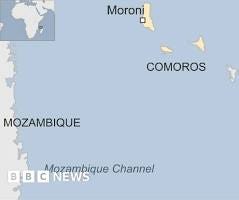
Mayotte, officially the Department of Mayotte (French: Département de Mayotte), is an overseas department and region and single territorial collectivity of France. It is one of the overseas departments of France as well as one of the 18 regions of France, with the same status as the departments of Metropolitan France. It is an outermost region of the European Union and, as an overseas department of France, part of the eurozone.
Mayotte
Overseas department, region and single territorial collectivity of France and outermost region of the European Union
Department of Mayotte
Département de Mayotte (French)
Flag of Mayotte
Flag
Coat of arms of Mayotte
Coat of arms
Anthem: La Marseillaise
(”The Marseillaise”)
Duration: 1 minute and 20 seconds.1:20
Coordinates: 12°50′35″S 45°8′18″E
Country
France
Prefecture
Mamoudzou
Departments
1
Government
• President of the Departmental Council
Ben Issa Ousseni (LR)
Area
• Total
374 km2 (144 sq mi)
• Rank
18th region
Population (Jan. 2024)
• Total
320,901
• Density
858/km2 (2,220/sq mi)
Demonym
Mahoran
GDP[2]
• Total
€2.932 billion
• Per capita
€11,300
Time zone
UTC+03:00 (EAT)
ISO 3166 code
YTFR-976
Currency
Euro (€) (EUR)
Website
Prefecture
Departmental Council
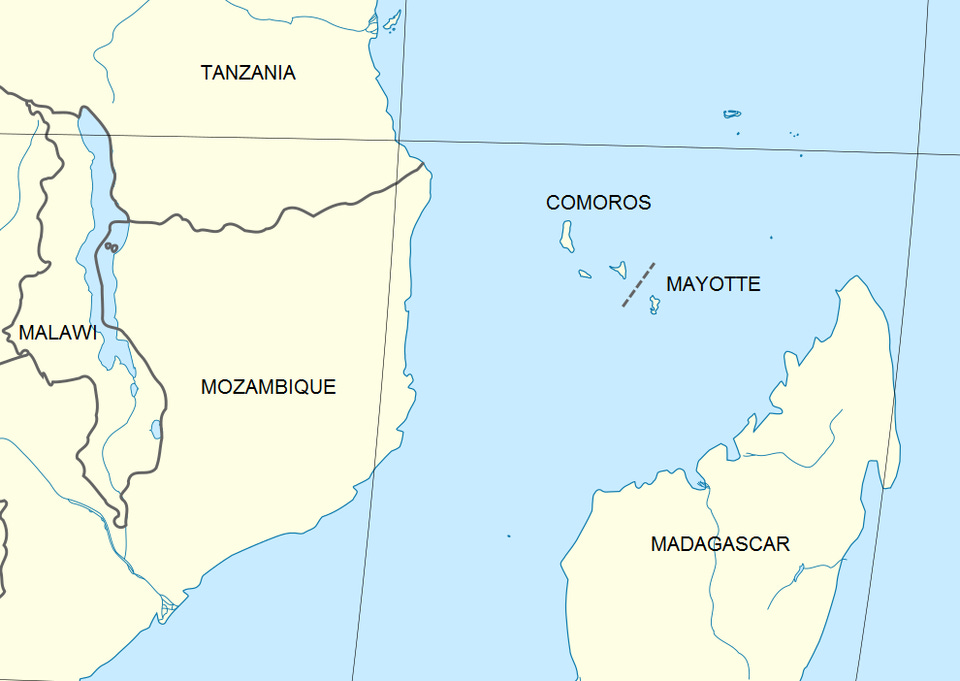
Mayotte is located in the northern part of the Mozambique Channel in the western Indian Ocean off the coast of Southeastern Africa, between the northwestern part of the island of Madagascar and northeastern Mozambique on the continent. Mayotte consists of a main island, Grande-Terre (or Maore), a smaller island, Petite-Terre (or Pamanzi), as well as several islets around these two. Mayotte’s land area is 374 square kilometres (144 sq mi) and, with its 320,901 people according to January 2024 official estimates, is very densely populated at 858 inhabitants per km2 (2,228 per sq mi). The biggest city and prefecture is Mamoudzou on the larger Grande-Terre. The Dzaoudzi–Pamandzi International Airport is located on the neighbouring smaller island of Petite-Terre. The territory is also known as Maore, the native name of its main island.
French is the official language and is spoken as a second language by an increasing part of the population, with 63% of the population 14 years and older reporting in the 2007 census that they could speak it. There are two native languages of Mayotte. The most commonly spoken is Shimaore, and the lesser spoken is a Malagasy language called Kibushi, of which there are two dialects; Kibushi sakalava, most closely related to the Sakalava dialect of Malagasy, and Kibushi antalaotsi, most closely related to the dialect spoken by the Antalaotra of Madagascar. Both dialects have been influenced by Shimaore.
The islands were populated from neighbouring East Africa, with a later arrival of Arabs, who brought the religious faith of Islam. A sultanate was established in 1500. The vast majority of the population today is Muslim. In the 19th century, Mayotte was conquered by Andriantsoly, former king of Iboina on Madagascar. He sold the islands in 1841 to France (Kingdom of France and its later July Monarchy of 1830–1848) and its overseas French Empire, and Mayotte integrated to the Crown of France of King Louis Philippe I (1773–1850, reigned 1830–1848, of the royal dynasty of the House of Bourbon-Orleans), then seven years later with the subsequent Second French Republic (1848–1870) after the French Revolution of 1848. In the immediate aftermath of French sovereignty over the islands, slavery was abolished and laborers were imported to the area to work in fields and plantations. Mayotte chose to remain with France after the nearby Comoros declared its independence following their 1974 independence referendum. Mayotte however became the 101st department of France (Fifth French Republic) on 31 March 2011 and became an outermost associated region of the European Union on 1 January 2014, following a March 2009 referendum with an overwhelming result in favour of remaining in the status of a French department. The issue of illegal immigration became very important in local political life in the 2010s and 2020s which led France to organize Operation Wuambushu.
In 2019, with an annual population growth of 3.8%, half the current population was less than 17 years old. In addition, 48% of the population were foreign nationals. Most of the immigrants come from neighboring island state of Comoros, many illegally. Despite being France’s poorest department, Mayotte is much richer than other neighboring East African countries and has developed French infrastructure and welfare system, making it a tempting destination for Comorans and other East Africans living in poverty in the region.
The department faces enormous challenges. According to an Institut national de la statistique et des études économiques (National Institute of Economic Statistics Studies of France – INSEE) report published in 2018, over 83% of the population live under the poverty line according to French standards, compared to 16% in metropolitan France, 40% of dwellings are corrugated sheet metal shacks, 29% of households have no running water, and 34% of the inhabitants between the age of 15 and 64 do not have a job. These difficult living conditions mainly concern the large population of illegal migrants who crowd into shanty towns.
Economy
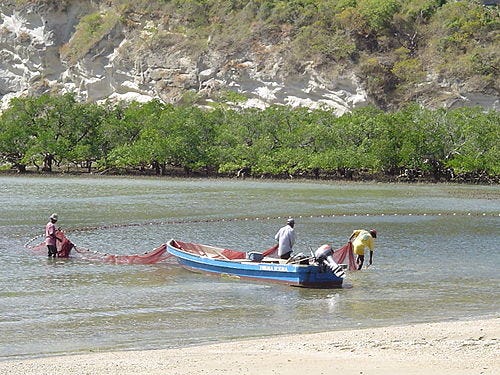
Fisherman at Moya beach, Petite-Terre
The official currency in Mayotte is the euro.
In 2019, the GDP of Mayotte at market exchange rates was €2.66 billion (US$2.98 bn). In that same year the GDP per capita of Mayotte at market exchange rates, not at PPP, was €9,692 (US$10,850 ), which was eight times larger than the GDP per capita of the Comoros that year, but only 42.8% of the GDP per capita of Réunion and 26.4% of the GDP per capita of Metropolitan France. Living standards are therefore lower than in metropolitan France. At the 2017 census, 10% of dwellings in Mayotte had no electricity, 29% of dwellings had no running water inside the dwelling, and 54% of dwellings had no toilets inside the dwelling.
GDP (nominal) per capita in 2019 (US$) $500–1,000 $1,000–2,000 $2,000–5,000 $5,000–10,000 $10,000–20,000
The economy of Mayotte has grown significantly since the end of the 20th century due to financial transfers from the French central state and the gradual transformation of the territory into a full-fledged French department after a 2009 referendum, with considerable upgrading of public services and infrastructure.
The economy of Mayotte grew by an average of +9.3% per year in real terms from 2001 to 2008, before being affected by the 2008 financial crisis and experiencing as a result a recession of −0.4% in 2009. The economy rebounded as early as 2010, driven by the transformation of the territory into an overseas department, decided in a referendum in 2009 and taking effect in 2011. From 2010 to 2017, the economy of Mayotte grew on average by +6.9% per year in real terms, but economic growth slowed to +2.1% in 2018 due to the massive civil unrest experienced by the territory that year, with weeks of demonstrations, roadblocks, and work stoppages paralyzing Mayotte’s economy between January and April 2018. Economic growth rebounded to +5.2% in 2019, but Mayotte was affected by the COVID-19 pandemic in 2020, with growth estimated at only +1.1% in 2020.
Thanks to rapid economic growth, Mayotte has begun to catch up with the rest of France in terms of standards of living. Despite high population growth, Mayotte’s GDP per capita managed to rise from 15.4% of Metropolitan France’s level in 2000 to 27.3% of Metropolitan France in 2017, but this catching-up process has stalled since 2018 due to the civil unrest that took place in Mayotte that year and its economic consequences. Compared to Réunion, Mayotte’s GDP per capita rose from 28.7% of Réunion’s level in 2000 to 43.7% in 2017, before falling back slightly.
The unemployment rate for youth ages 15–29 is 43%. The overall unemployment rate is 30%. 8 out of 10 children in Mayotte live in poverty.
Regional GDP of Mayotte
(in euros, current prices) 2000 2005 2010 2015 2016 2017 2018 2019 Nominal GDP (€ bn)0.560.921.432.082.212.422.502.66GDP per capita (euros)3,8005,3007,1008,8009,0009,5009,4009,700GDP per capita as a %
of Metropolitan France‘s15.4%18.7%22.8%26.2%26.5%27.3%26.4%26.4%GDP per capita as a %
of Réunion‘s28.7%31.0%38.1%42.6%42.5%43.7%42.6%42.8%Sources: Eurostat;[62] INSEE.
The local agriculture is threatened by insecurity, and due to a more expensive workforce cannot compete on the export ground with Madagascar or the Comoros union. The major economic potential of the island remains tourism, however hampered by delinquency rates.
Source: Wikipedia
Mayotte is an overseas department and region of France in the Indian Ocean, part of the Comoros archipelago,, with a population of approximately 300,000. It is an integral part of France and the EU, using the euro and French as official languages. The island faces high poverty, crime rates, significant migration from neighboring Comoros, and is currently recovering from the devastating impact of Cyclone Chido.
Key Facts and Background
Location: Situated between Madagascar and the East African coast.
Status: Voted to remain with France in 1974, becoming the 101st French department in 2011.
Population: Around 300,000, with a high proportion of residents living in informal settlements.
Economy: Heavily dependent on French aid, with roughly 75-83% of the population living below the poverty line.
Language: French is official, but only roughly half the population is literate in it.
Current Challenges (2024-2026 Context)
Cyclone Chido (Dec 2024): A Category-4 cyclone caused widespread destruction, leaving many without power, water, and food, with hundreds feared dead.
Immigration & Crime: As a “gateway to Europe,” it faces intense immigration from the Comoros. Social tensions have led to protests and roadblocks by residents demanding crackdowns on crime.
Social Infrastructure: The island struggles with overpopulation, water shortages, and overcrowded schools.
Citizenship: Unlike mainland France, children born in Mayotte do not automatically receive French citizenship, a measure aimed at controlling population influx.
Geography and Culture
Landscape: Volcanic island known for its coral reefs and “scented island” nickname due to perfume plantations.
Religion: Predominantly Muslim.
This profile is based on reports, including from the BBC and DW Documentary, regarding events through early 2025.