
Samoa country profile
Samoa's economy relies on agriculture, fishing, tourism, and significant overseas remittances from citizens living abroad.
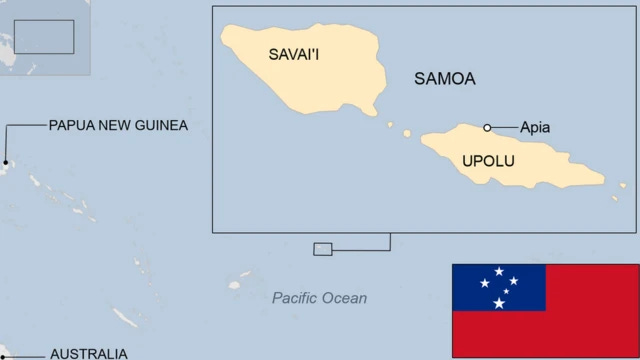
The Independent State of Samoa is made up of nine volcanic islands, two of which - Savai'i and Upolu - make up more than 99% of the land.
It was governed by New Zealand until its people voted for independence in 1961. It has the world's second-largest Polynesian group, after the Maori.
Samoa's society centres around the extended family, headed by an elected chief who directs the family's social, economic and political affairs, and the church, which is a focus of recreational and social life.
The economy revolves around fishing and agriculture, which is vulnerable to cyclones and disease.
Attempts at diversification have met with success. Tourism is growing, thanks to scenic attractions and fine beaches. Offshore banking spearheads an expanding services sector. Light manufacturing is expanding, and has attracted foreign investment.
Despite this, many younger Samoans are leaving for New Zealand, the US and American Samoa. Money sent home by Samoans living abroad is a key source of household income.
INDEPENDENT STATE OF SAMOA: FACTS
Capital: Apia
Area: 2,831 sq km
Population: 205,500
Languages: Samoan, English
Life expectancy: 70 years (men) 76 years (women)
LEADERS
Head of state: Tuimalealiʻifano Vaʻaletoʻa Eti Sualauvi II
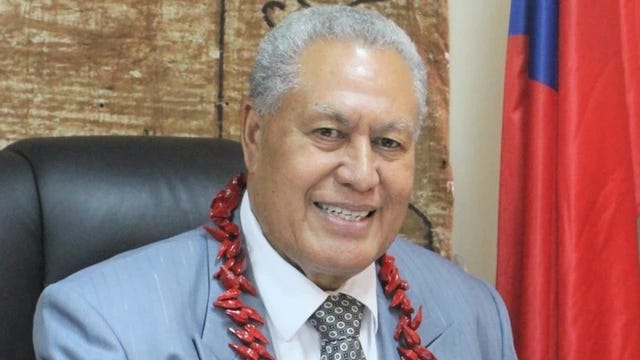
He was sworn in as head of state in July 2017, succeeding Tui Ātua Tupua Tamasese Tupuola Tufuga Efi. He was reappointed as head of state for a second five-year term in August 2022.
The head of state, is by custom chosen from one of the four highest-ranking paramount chiefs in the country.
Prime minister: Fiamē Naomi Mataʻafa
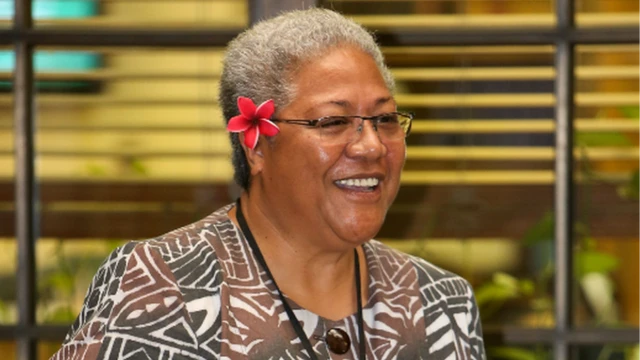
An April 2021 election win propelled Fiame Naomi Mata'afa into office as Samoa's first woman prime minister, ending the 22-year rule of Tuilaepa Sailele Malielegaoi.
She emerged from the governing HRPP party to join the opposition FAST party in January, bringing with her decades of experience, including a stint as deputy prime minister, not to mention her prominence as the daughter of the first prime minister and a royal lineage.
MEDIA
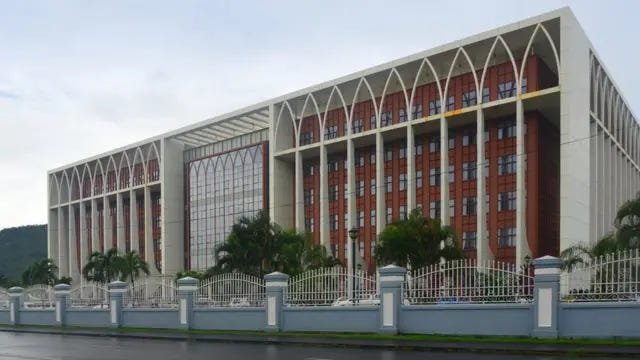
Image caption,The Chinese-built Tui Atua Tupua Tamasese Efi government complex in Samoa's capital, Apia
Several public and privately-owned media outlets operate in Samoa, and internet access has expanded rapidly in recent years.
Press freedom is "generally respected", according to US-based Freedom House but it warns that "politicians and other powerful actors have used libel or defamation suits to respond to critical remarks or stories about them".
TIMELINE
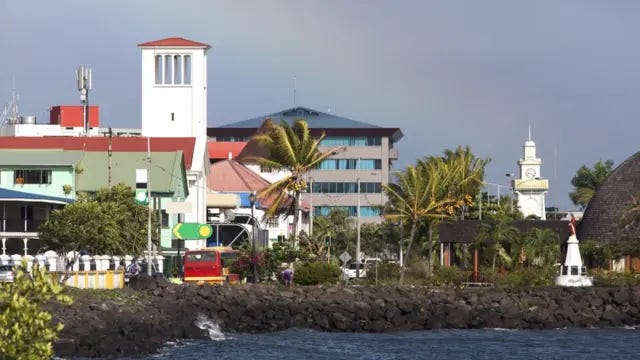
Image caption,Apia has been Samoa's official capital since 1959
Some key dates in Samoa's history:
1,500BC onwards - Samoa is discovered and settled by the Lapita people, Austronesian people who spoke Oceanic languages travelling from the area of eastern New Guinea and the Solomons.
1722 - Dutch navigator Jacob Roggeveen is the first European to explore Samoa.
1768 - French explorer Louis-Antoine de Bougainville names the islands the Navigator Islands.
1820s onwards - American and European whalers, traders begin arriving
1830 - London Missionary Society arrives in Samoa.
1868-94 - Samoan Civil War: A contest between rival Samoan factions over who would be king with armed skirmishing at various points. There is also a parallel three-way struggle between the colonial powers of the USA, Germany and Britain for control over the islands.
1887-89 - Samoan Crisis: A naval standoff between the United States, Germany, and the United Kingdom over fuelling rights and concessions in Samoa. Three German, three US and one British warship face each other in Apia harbour. The standoff ends when the 1889 Apia Cyclone wrecks all but the British ship.
1899 - Tripartite Convention: Divides the island group into German Western Samoa, while the US takes over eastern Samoa (now American Samoa). Britain withdraws its claims in return territorial concessions in Pacific and elsewhere by Germany.
1914 - New Zealand occupies Western Samoa during World War One.
1920-1962 - New Zealand administers Western Samoa following a League of Nations mandate in 1920, and then a United Nations mandate after World War Two.
1918-1919 - Flu pandemic: some 20% of the population die after New Zealand authorities allow the SS Talune to dock in breach of quarantine regulations. The pandemic undermines Samoan confidence in New Zealand's administrative capacity and competence.
1929 - Black Saturday: New Zealand troops kill ten and wound about 50 non-violent demonstrators from the Mau, a movement which is opposed to New Zealand administration.
1930 - New Zealand bans the Mau, as its followers disperse they are pursued by a force of marines and sailors.
1936 - Following the Labour Party's victory in New Zealand's 1935 general election, the Mau is recognised as a legitimate political organisation.
1962 - Western Samoa becomes independent, the first Pacific island nation to do so.
1970 - Western Samoa joins the Commonwealth.
1997 - Country changes its name from Western Samoa to Samoa.
2011 - Samoa changes its time zone from UTC−11 to UTC+13, moving the International Date Line to the east of the country. The aim is more closely align trading hours with those in Australia and New Zealand, and so boost the economy.
2021 - Fiamē Naomi Mataʻafa becomes Samoa's first female prime minister.
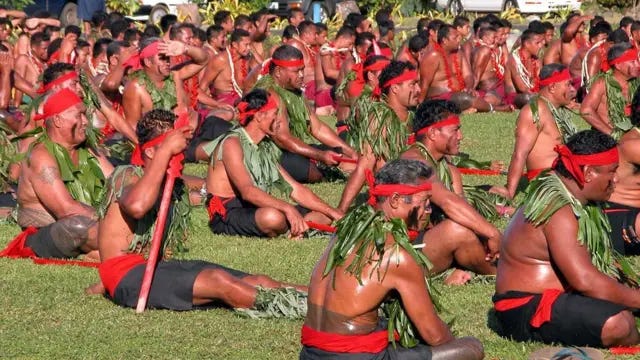
Image caption,Samoan matai or chiefs attend a ceremony
The BBC
Overview

Samoa's economy relies on agriculture, fishing, tourism, and significant overseas remittances from citizens living abroad. Key strengths include a competitive, educated workforce and low taxes, but the economy is vulnerable to natural disasters, geographical remoteness, and lacks diversification. Following a period of economic transformation in the mid-1990s, recent growth is projected, supported by efforts to attract foreign investment and strengthen infrastructure.
Key Sectors
Agriculture:
Employs a large portion of the workforce, with exports of products like coconut cream, coconut oil, and copra.
Fishing:
Another significant contributor to the Samoan economy.
Tourism:
An important sector that benefits from Samoa's beautiful natural environment and culture.
Remittances:
Private financing and funds from overseas, particularly from Samoans working in other countries, are a vital source of economic support.
Economic Strengths
Educated Workforce: Samoa possesses an educated and English-speaking workforce.
Competitive Costs: The country offers competitive wages, low corporate taxes, and low income taxes.
Stable Environment: A peaceful and stable parliamentary democracy contributes to its economic climate.
Infrastructure: The country has solid infrastructure to support its economic activities.
Challenges and Vulnerabilities
Geographical Remoteness: Samoa's isolated location poses challenges for its economy.
Lack of Diversification: The economy is not well-diversified, making it heavily reliant on a few key sectors.
Natural Disasters: Samoa is highly vulnerable to devastating natural disasters like storms, earthquakes, and tsunamis.
Recent Developments and Outlook
Samoa has experienced economic transformation through strong reform policies.
Growth is expected in the coming years, with forecasts for 2025 showing projected GDP growth.
There is a focus on attracting foreign investment, reducing trade facilitation costs, and enhancing the resilience of public and private sectors against future shocks.
The economy benefits from the reopening of borders and continued flows of remittances.
Economy of Samoa
Article Talk
The economy of Samoa is dependent on agricultural exports, development aid, and private financing from overseas. The country is vulnerable to devastating storms, earthquakes, and tsunamis. Agriculture employs two-thirds of the labor force, and furnishes 9% of exports, featuring coconut cream, coconut oil and copra. Outside of a large automotive wire harness factory, the manufacturing sector mainly processes agricultural products. Tourism is an expanding sector; more than 70,000 tourists visited the islands in 1996 and 120,000 in 2014. The Samoan Government has called for the deregulation of the financial sector, encouragement of investment, and continued fiscal discipline. Observers point to the flexibility of the labor market as a basic strength factor for future economic advances.[citation needed]
Economy of
Samoa
Statistics
GDP
Increase $1.16 billion (nominal; 2025)
Increase $1.62 billion (PPP; 2025)
GDP rank
184th (nominal; 2025)
186th (PPP; 2025)
GDP growth
Increase 9.2% (2023)
Increase 9.4% (2024)
Increase 5.4% (2025)
Increase 2.6% (2026f)
GDP per capita
Increase $5,470 (nominal; 2025)
Increase $7,620 (PPP; 2025)
Source: Wikipedia