
Tibet profile
The Tibet Autonomous Region (TAR), often shortened to Tibet in English or Xizang in Hanyu Pinyin, is an autonomous region of the People's Republic of China.
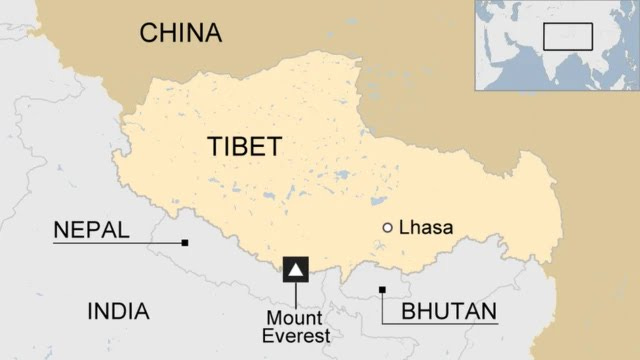
Tibet, the remote and mainly-Buddhist territory known as the "roof of the world", is governed as part of China.
Historically, Tibet was made up of three major areas - U-Tsang, Amdo and Kham. While most of U-Tsang is in China's self-defined Tibet Autonomous Region, the other two lie outside it.
Tibet's history includes periods when it was an independent entity and other times when it was ruled by powerful Chinese and Mongolian dynasties.
Beijing claims a centuries-old sovereignty over Tibet. However, this Chinese view of imperial rule over Tibet spanning many centuries is disputed by exiled Tibetan communities and rights groups.
The allegiances of many Tibetans lie with the exiled spiritual leader, the Dalai Lama, who is seen by his followers as a living god but by Beijing as a separatist threat.
In 1950, China sent in thousands of troops to enforce its claim on Tibet. In 1959, after a failed anti-Chinese uprising, the Dalai Lama fled and set up a government in exile in India. Many of Tibet's monasteries were destroyed during China's Cultural Revolution.
Thousands of Tibetans are believed to have been killed during periods of repression and martial law. While Tibetans' standard of living has greatly improved, Tibet remains tightly controlled by Chinese authorities.
TIBET: FACTS
Capital: Lhasa
Area: 1,228,400 sq km
Population: 3.6 million
Languages: Tibetan, Mandarin
Life expectancy: 70 years
BACKGROUND

Image caption,Many Tibetans see spiritual leader the Dalai Lama as a living god
Tibet's economy depends largely on agriculture. Forests and grasslands occupy large parts of the country. The territory is rich in minerals, but poor transport links have limited their exploitation. Tourism is an important source of revenue.
Under international pressure, China eased its grip on Tibet in the 1980s, introducing "Open Door" reforms and boosting investment.
Tourism and Beijing's modernisation drive stand in contrast to Tibet's former isolation. But critics say Tibetans have little say in building their future.
Buddhism reached Tibet around 700AD. The Dalai Lama, or Ocean of Wisdom, is the leading spiritual figure; the Panchen Lama is the second most important figure. Both are seen as the reincarnations of their predecessors.
However, the Dalai Lama and Beijing have been at odds over the 11th incarnation of the Panchen Lama - identifying different youngsters for the role. The Dalai Lama's choice, Gedhun Choekyi Nyima, has not been seen since his detention by the Chinese authorities in 1995.
No country openly disputes China's claim to sovereignty, and China has blocked all UN Security Council resolutions on Tibet since the People's Republic took over the China seat in the UN in 1971.
The Tibetan cause has won the sympathy of individuals and groups, many of whom campaign for an independent Tibet to take shape.
TIMELINE

Image caption,Lobsang Sangay was elected by exiled Tibetans to lead the government-in-exile in 2011
Key dates in the history of Tibet:
7th-9th Century - Namri Songzen and descendants begin to unify Tibetan-inhabited areas and conquer neighbouring territories, in competition with China.
822 - Peace treaty with China delineates borders.
1244 - Mongols conquer Tibet. Tibet enjoys considerable autonomy under Yuan Dynasty.
17th/18th Centuries - Tibet involved in power struggles between Manchu and Mongol factions in China.
1624 - First European contact as Tibetans allow Portuguese missionaries to open church. Expelled in 1745.
1717 - Mongols conquer Tibet and sack Lhasa. Chinese Emperor Kangxi ousts them in 1720, and re-establishes rule of Dalai Lama.
1724 - China's Qing dynasty appoints resident commissioner to run Tibet, annexes parts of historic Kham and Amdo provinces.
1750 - Rebellion against Chinese commissioners quelled by Chinese troops.
1774 - British East India Company agent George Bogle visits to assess trade possibilities.
1788 and 1791 - China sends troops to expel Nepalese invaders.
1793 - China decrees its commissioners in Lhasa to supervise selection of Dalai and other senior lamas.
1850s - Russian and British rivalry for control of Central Asia prompts Tibetan government to ban all foreigners and shut borders.
1865 - Britain starts discreetly mapping Tibet.
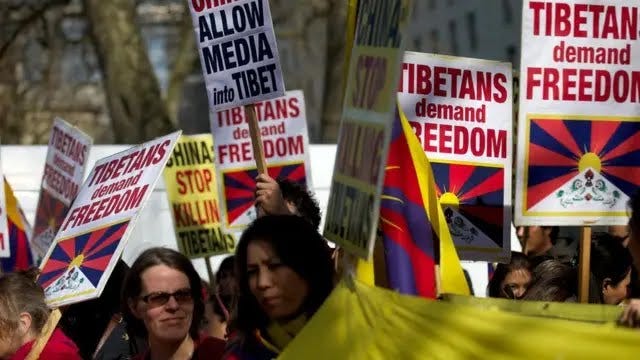
Image caption,Tibet has supporters of independence around the world
1904 - Dalai Lama flees British military expedition under Colonel Francis Younghusband. Britain forces Tibet to sign trading agreement in order to forestall any Russian overtures.
1906 - British-Chinese Convention of 1906 confirms 1904 agreement, UK pledges not to annex or interfere in Tibet in return for indemnity from Chinese government.
1907 - Britain and Russia acknowledge Chinese suzerainty over Tibet.
1908/9 - China restores Dalai Lama, who flees to India as China sends in army to control his government.
1912 - Chinese garrison surrenders to Tibetan authorities after Chinese Republic declared.
1912 - 13th Dalai Lama returns from India, Chinese troops leave.
1913 - Tibet reasserts independence after decades of rebuffing attempts by Britain and China to establish control.
1935 - The man who will later become the 14th Dalai Lama is born in a small village in north-eastern Tibet. Two years later, Buddhist officials declare him to be the reincarnation of the 13 previous Dalai Lamas.
1949 - Mao Zedong proclaims the founding of the People's Republic of China and threatens Tibet with "liberation".
1950 - China enforces a long-held claim to Tibet. The Dalai Lama, now 15, becomes head of state.
1951 - Tibetan leaders are forced to sign a treaty dictated by China. which officially guarantees Tibetan autonomy but also allows the establishment of Chinese civil and military headquarters at Lhasa.
Mid-1950s - Mounting resentment against Chinese rule leads to outbreaks of armed resistance.
1959 - Full-scale uprising breaks out in Lhasa. Thousands are said to have died during the suppression of the revolt. 14th Dalai Lama and most of his ministers flee to northern India, followed by some 80,000 refugees.
1965 - Chinese government establishes Tibetan Autonomous Region (TAR).
1966-70s - China's Cultural Revolution results in the destruction of a large number of monasteries and cultural artefacts.
Late 1970s - End of Cultural Revolution leads to some easing of repression, though large-scale relocation of Han Chinese into Tibet continues.
1980s - China introduces "Open Door" reforms and boosts investment while resisting any move towards greater autonomy for Tibet.
1987 - The Dalai Lama calls for the establishment of Tibet as a zone of peace and continues to seek dialogue with China, with the aim of achieving genuine self-rule for Tibet within China.
1987-89 - Tibetan unrest: protests and demonstrations call for Tibetan independence. China temporarily imposes martial law.
1989 - The Dalai Lama is awarded the Nobel Prize for Peace.
1995 - The Dalai Lama names six-year-old Gedhun Choekyi Nyima, as the reincarnation of the Panchen Lama, Beijing places him under house arrest and designates another boy as their officially sanctioned Panchen Lama.
2006 - A new railway linking Lhasa and the Chinese city of Golmud is opened. Critics say it will significantly increase migration into Tibet and accelerate the undermining of traditional Tibetan culture.
2007 - The Dalai Lama hints at a break with the centuries-old tradition of selecting his successor, saying the Tibetan people should have a role.
2008 - Anti-China protests escalate into violence, months before Beijing hosts the Olympic Games.
UK recognises China's direct rule over Tibet for the first time.
2011 - Dalai Lama announces his retirement from politics. Exiled Tibetans elect Lobsang Sangay to lead the government-in-exile.
2016 - Campaign groups say China has started demolishing buildings at Larung Gar, said to be one world's largest centres of Buddhist learning, following a move by local authorities to halve the number of residents to 5,000 due to overcrowding concerns.
2019 - Lobsang Sangay, leader of the Tibetan government-in-exile, says Tibetans are being held in camps similar to the Muslim Uyghur camps in Xinjiang.
2024 - China gives go-ahead in Tibet for the world's largest hydropower dam, stoking concerns about displacement of local communities and environmental impacts downstream in India and Bangladesh.
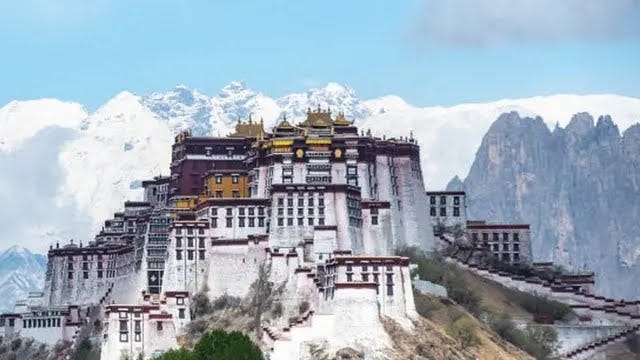
Image caption,The Potala Palace in Lhasa is the former residence of the Dalai Lama and one of the area's best known landmarks
The BBC
AI Overview
Tibet profile - BBC News
Tibet's economy is primarily subsistence agriculture and pastoralism, with livestock such as sheep and yaks, and crops like barley. Although it's the poorest region in China, state subsidies have increased its GDP and improved the living conditions for many Tibetans, though there are concerns about dependency on aid and the uneven distribution of benefits. Tourism and, more recently, mining and construction are growing revenue sources, but their long-term benefits and environmental impact are under scrutiny, as the focus is on economic development rather than indigenous growth, according to RFA.
Traditional Economy
Agriculture and Pastoralism:
For centuries, the economy has centered on raising livestock like sheep, yaks, and goats, and cultivating crops such as barley, wheat, and potatoes.
Nomadism:
A significant portion of the Tibetan population consists of nomads who range across the plateau with their herds, which is a vital part of their way of life and economy.
Modern Economic Development
State Subsidies:
The Tibet Autonomous Region (TAR) receives substantial subsidies from the central Chinese government, which have contributed to its GDP growth and improvements in living standards.
Tourism:
Tourism has become an increasingly important source of revenue, attracting visitors to its unique culture and landscapes.
Mining and Construction:
There's a growing focus on developing mining and construction industries as ways to boost the economy.
Challenges and Concerns
Dependency on Aid:
Some experts fear that Tibet's economic growth is driven by external aid rather than sustainable, indigenous development.
Distribution of Benefits:
There are concerns that the benefits of economic development are not shared equally, with potential disparities between ethnic Han and Tibetan populations, and between urban and rural areas.
Environmental Impact:
Industrial and mining activities raise concerns about their negative impact on the unique Tibetan environment and traditional culture.
Limited Trade:
External trade is currently very limited, with Nepal being a primary partner.
Tibet Autonomous Region
The Tibet Autonomous Region (TAR), often shortened to Tibet in English or Xizang in Hanyu Pinyin, is an autonomous region of the People's Republic of China. It was established in 1965 to replace the Tibet Area, a former administrative division of the Republic of China.
Tibet Autonomous Region
Xizang Autonomous RegionChinese
The Potala Palace in Lhasa
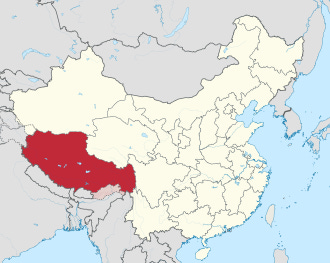
Location of the Tibet Autonomous Region in China (territory claimed by China but controlled by India is striped)
Capital
and largest city
Divisions
- Prefecture-level
- County-level
- Township-
level
7 prefectures
74 counties
699 towns and subdistricts
Government
• TypeAutonomous region •
• Total
1,228,400 km2 (474,300 sq mi) • Rank2ndHighest elevation
8,848 m (29,029 ft)Population
(2020
• Total
3,648,100 • Rank32nd • Density3.0/km2 (7.7/sq mi) • Rank33rdDemographics
• Ethnic composition86.0% Tibetan
12.2% Han
0.8% others
• Languages and dialectsTibetan, Mandarin Chinese
GDP (2023)
• Total CN¥ 250.5 billion (31st)
US$ 34.569 billion
• Per capitaCN¥ 75,237 (22nd)
US$ 10,640
CN-XZHDI (2022)0.648
Source: Wikipedia