
Transnistria profile
Transnistria is a self-proclaimed but unrecognized state that broke away from Moldova in 1990.
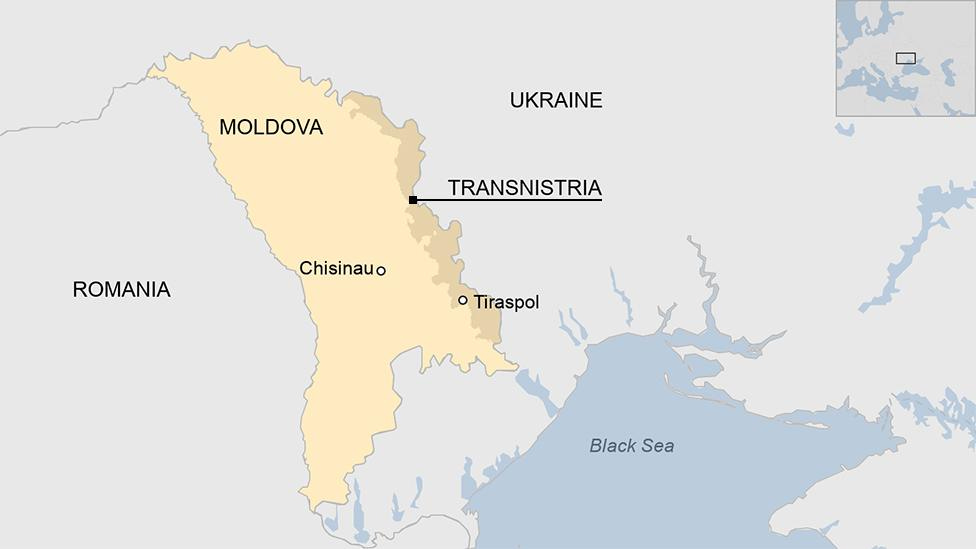
The separatist region of Transnistria or Trans-Dniester - a narrow strip of land between the Dniester river and the Ukrainian border - broke away from Moldova in 1990.
The international community does not recognise its self-declared statehood, and the de-facto government, which remains in a stand-off with Moldova, is economically, politically and militarily supported by Russia, which has an estimated 1,500 soldiers in Transnistria
A referendum on independence in September 2006, not recognised by Moldova or the international community, saw the territory reassert its demand for independence and vote in support of ensuing a union with Russia.
After Russia’s 2022 invasion of Ukraine, Ukraine sealed its border with Transnistria - this had been the main route for imports - making Transnistria wholly reliant on Moldova for imports through its own border.
TRANSNISTRIA: FACTS
Capital: Tiraspol
Area: 4,163 sq km
Population: 367,000
Languages: Russian, Romanian, Ukrainian
Currency: Transnistrian ruble
LEADER
President: Vadim Krasnoselsky
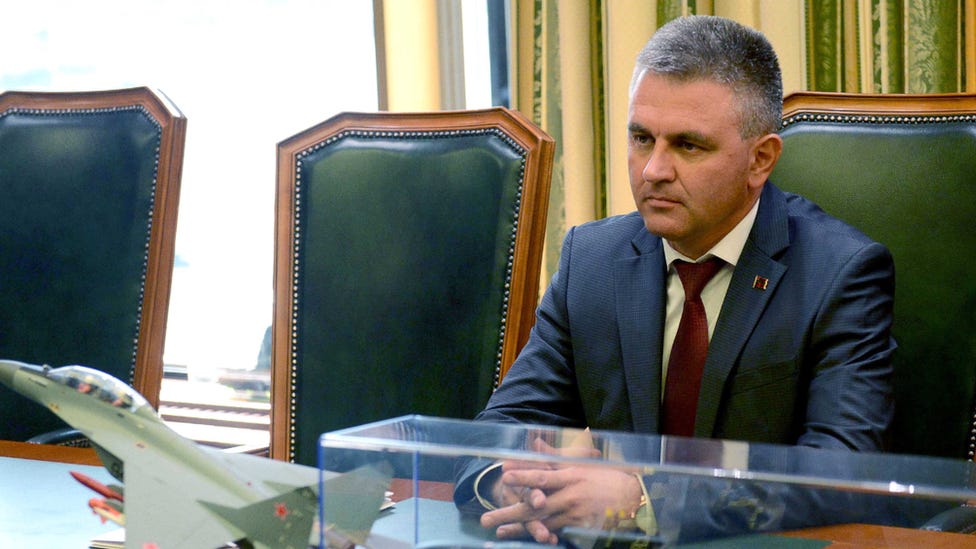
Image caption,
Vadim Krasnoselsky seeks ever-closer ties with Russia
Vadim Krasnoselsky was first elected president in December 2016, and was re-elected in December 2021.
He has expressed his support for Transnistria being a part of Russia on numerous occasions.
In October 2024, he said a confederation could be a solution to the decades-long Transnistrian conflict. He claimed that over years Transnistria had offered Chisinau “various forms of coexistence”.
A former speaker of the region’s parliament, he enjoys the support of the opposition Renewal party, which in 2016 entered into a partner relationship with the Moscow-based United Russia party.
He served as interior minister from 2007 to 2012. He then left politics, returning as a member of parliament in 2015.
MEDIA
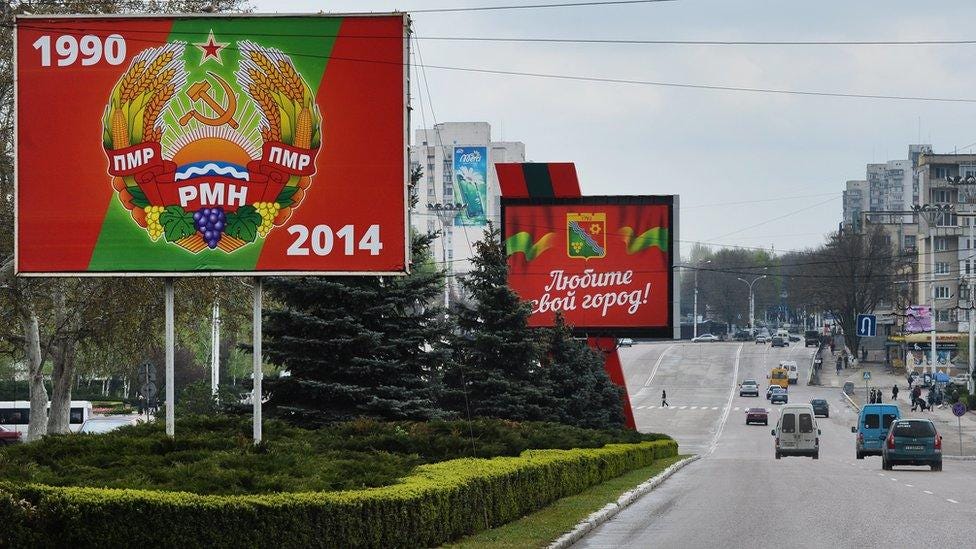
Image caption,
Advertising panel in Tiraspol displays the official coat of arms of Transnistria
The separatist authorities exercise tight control over the media. Many outlets are owned either directly by the region’s government or by business groups with close links to the authorities.
Western governments and media freedom groups say anti-government outlets face serious restrictions, adding that journalists often self-censor. These claims are denied by officials.
HISTORY
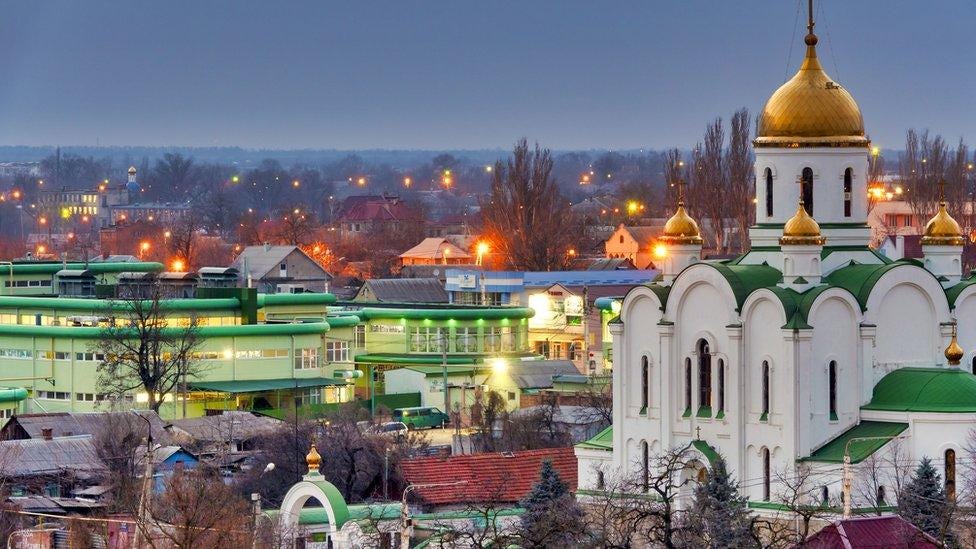
Image caption,
Church of the Nativity in Tiraspol
In the post World War Two carve-up of the region, Moscow created Moldova’s forerunner, the Moldavian Soviet Socialist Republic, from two disparate elements: the mainly Russian-speaking Dniester region, formerly an autonomous part of Ukraine, and the neighbouring region of Bessarabia, which had been part of Romania from 1918-1940.
But as last years of the Soviet Union, alarm grew in Transnistria over growing calls for Moldovan independence - and the possible reunification of Moldova with Romania.
A 1989 law that made Moldovan an official language added to the tension and the region broke away in September 1990.
The breakaway territory’s paramilitary forces took over Moldovan public institutions in the area in 1991. Fighting intensified, culminating in a battle on the right bank of the Dniester in June 1992. Up to 700 people were killed in the conflict.
A ceasefire was signed in July 1992, and a demilitarised security zone was established. The settlement was enforced by Russian troops already stationed in the territory.
Russian presence
The continuing presence of Russian troops has been a stumbling block in peace talks and the West is concerned about the large Soviet-era arsenal in Cobasna, and the safety of munitions stored there.
Russia has two military contingents in the territory, a peacekeeping contingent, and a group of troops which is the remnant of the former Soviet 14th Army.
Moldova has repeatedly called for withdrawal of the Russian troops and removal of the arms from Cobasna.
A pull-out began in 2001 but was halted when Transnistria blocked the dispatch of weapons. Subsequent agreements to resume failed to reach fruition.
Long-running talks supervised by the OSCE, Russia and Ukraine have yet to yield a political solution. In 2004 a Russian-brokered plan, which would have made the presence of Russian troops permanent, sparked mass protests in Moldova and was shelved.
There are disputes over language issues. Though dominated by Russian-speakers, around 40% of the population in Transnistria speak Moldovan, which is virtually identical to Romanian, as a first language.
Transnistria contains most of Moldova’s industrial infrastructure, but its economic potential is limited by its international isolation.
It has its own currency, constitution, parliament, flag and anthem. One of the last bastions of Soviet-style rhetoric, the territory has nonetheless privatised some of its industrial enterprises.
Russia shores up the region with financial assistance. It has a reputation for corruption, organised crime and smuggling, and has denied accusations of illegal arms sales and of money laundering.
The BBC
Transnistria
Transnistria officially known as the Pridnestrovian Moldavian Republic (PMR) and locally as Pridnestrovie, is a landlocked breakaway state internationally recognised as part of Moldova. It controls most of the narrow strip of land between the Dniester river and the Moldova–Ukraine border, as well as some land on the other side of the river’s bank. Its capital and largest city is Tiraspol. Transnistria is officially designated by the Republic of Moldova as the Administrative-Territorial Units of the Left Bank of the Dniester (Romanian: Unitățile Administrativ-Teritoriale din stînga Nistrului) or as Stînga Nistrului (”Left (Bank) of the Dniester”).
Pridnestrovian Moldavian Republic
Official names
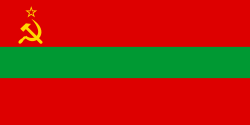
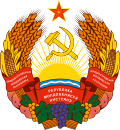
Anthem:
Мы славим тебя, Приднестровье
My slavim tebya, Pridnestrovie
“We Sing the Praises of Transnistria“
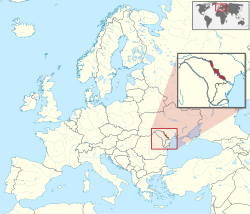
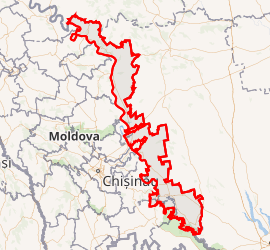
Status: Unrecognised state
Capital
and largest city

Official languages
(2015)
29.1% Russians
22.9% Ukrainians
2.4% Bulgarians
1.1% Gagauz
0.5% Belarusians
0.2% Transnistrians
1.4% others
(14% did not specify)
Transnistrian
Pridnestrovian
GovernmentUnitary semi-presidential republic
• Independence from Moldavian SSR declared
2 September 1990
• Independence from Soviet Union declared
25 August 1991
• Succeeds the Pridnestrovian Moldavian Soviet Socialist Republic
5 November 1991
2 March – 1 July 1992
• Total
4,163 km2 (1,607 sq mi)
• March 2024 estimate
367,776 (Moldovan estimate)
• 2015 census
475,373
• Density
73.5/km2 (190.4/sq mi)
GDP (nominal)2021 estimate
• Total
$1.201 billion
• Per capita
$2,584
Currency: Transnistrian ruble
AI Overview

Transnistria is a self-proclaimed but unrecognized state that broke away from Moldova in 1990.
It is a narrow, landlocked territory on the Moldovan border with Ukraine, with its capital in Tiraspol, where Soviet-era symbols are still prominent. The region has a history of conflict with Moldova and maintains close ties with Russia.
Key facts about Transnistria
Unrecognized state: Transnistria is not recognized by any UN member state, though it maintains its own government and security forces.
Soviet heritage: The region still displays Soviet-era symbols, such as a statue of Lenin in the capital, Tiraspol.
History: After the collapse of the Soviet Union, Transnistria declared independence from Moldova in 1990, leading to a brief war in 1992.
Russian influence: There are about 1,500 Russian peacekeepers in the region, and Transnistria has relied on cheap Russian gas for years, though it has recently sought to decrease its dependence.
Security concerns: Moldova views Transnistria as an outpost of Russian influence that can be used to destabilize the country.
Economic situation: The region’s economy is closely tied to Russia and has faced challenges, including its reliance on cheap energy from Russia.